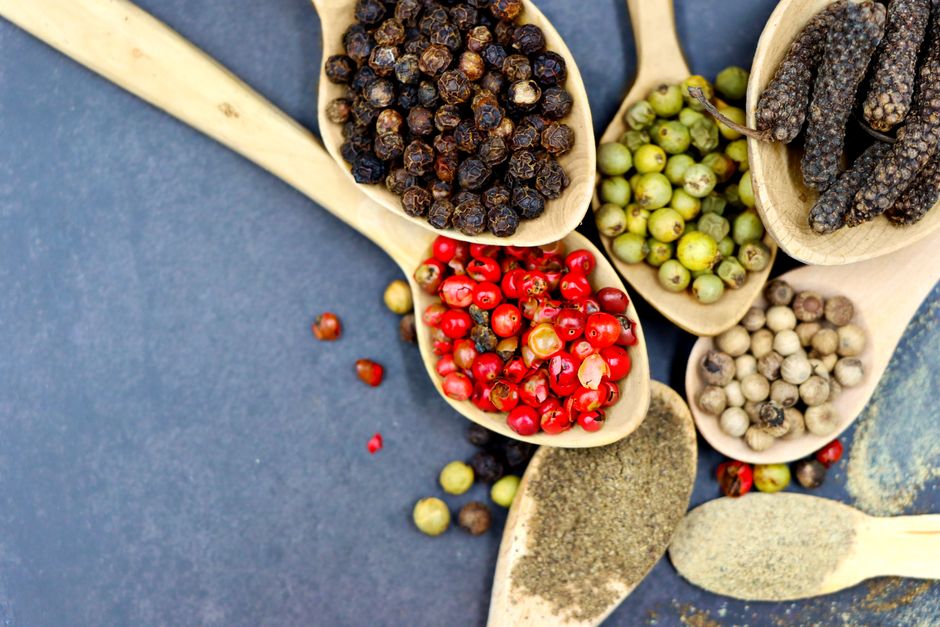
Photo: Marta Branco / Pexels
Open a spice rack and you will often find "Sichuan pepper" sitting right next to black pepper. The names are similar, but the two have almost nothing in common, neither botanically nor on the palate. Understanding the difference will change the way you cook.
Two plants, two very different families
Classic pepper, such as our Kampot black pepper, comes from Piper nigrum, a climbing vine whose berries grow in long clusters. Its heat comes from piperine, a warm, aromatic burn that rises in the nose and fades quickly.
Sichuan pepper is not a pepper at all. It is the dried husk of a prickly ash shrub of the Zanthoxylum genus, which belongs to the citrus family. What you eat is the outer shell of the berry, not a peppercorn.
The famous "málà" tingle
Sichuan pepper does not really burn: it makes the lips and tongue tingle and slightly numb, a sensation caused by compounds called sanshools. In Sichuan cuisine this is called má (numbing), and it is paired with là (chilli heat) to create the legendary "málà" flavour.
Its aroma is also unlike black pepper: citrus zest, grapefruit, flowers and a hint of rose rather than woody warmth.
Red or green Sichuan pepper?
- Red Sichuan pepper: the classic, with a floral, citrusy scent and a strong tingle. Perfect for stir-fries, braises, soups and aromatic oils. Discover our red Sichuan pepper.
- Green Sichuan pepper: rarer and fresher, harvested young, with lime and yuzu notes and a gentler tingle. Lovely with fish, seafood and Asian salads. Discover our green Sichuan pepper.
How to use each one
Black pepper is a seasoning and a finishing touch: grind it fresh over meat, eggs, sauces or even strawberries. Sichuan pepper works differently. Toast the husks briefly in a dry pan until fragrant, then crush them and add them to oil, marinades or spice blends. Remove any hard black seeds, which taste gritty.
Use it sparingly at first: a pinch is enough to transform a dish, and too much can overwhelm the palate.
Can they work together?
Absolutely. Many cooks combine the two: the warm, deep heat of Kampot pepper supports the citrus tingle of Sichuan pepper. Try a mix of both on grilled duck, pan-fried prawns or a simple bowl of noodles with chilli oil.
To keep them at their best, store both away from light and moisture, and crush them just before using. Whole husks and berries keep their aroma far longer than ready-ground powders.
To discover in the shop: Kampot Black Pepper 100g IGP · Red Sichuan Pepper · Green Sichuan Pepper