Photo: Frank Cone / Pexels
Why the name “Kampot” matters
Kampot pepper is not just a pepper grown somewhere in Cambodia. It carries a protected name, tied to a precise place and to traditional methods. Cambodia protected it nationally first, and in 2016 the European Union granted it Protected Geographical Indication (PGI) status. In practice, a pepper sold in Europe as “Kampot” must really come from the Kampot and Kep area.
The origin: Kampot and Kep, nowhere else
The PGI covers the provinces of Kampot and Kep, in southern Cambodia, between the mountains and the Gulf of Thailand. A pack that simply says “Cambodian pepper” or “Asian pepper” tells you nothing about the exact origin, while a genuine Kampot names its province.
Hand-picked and sun-dried
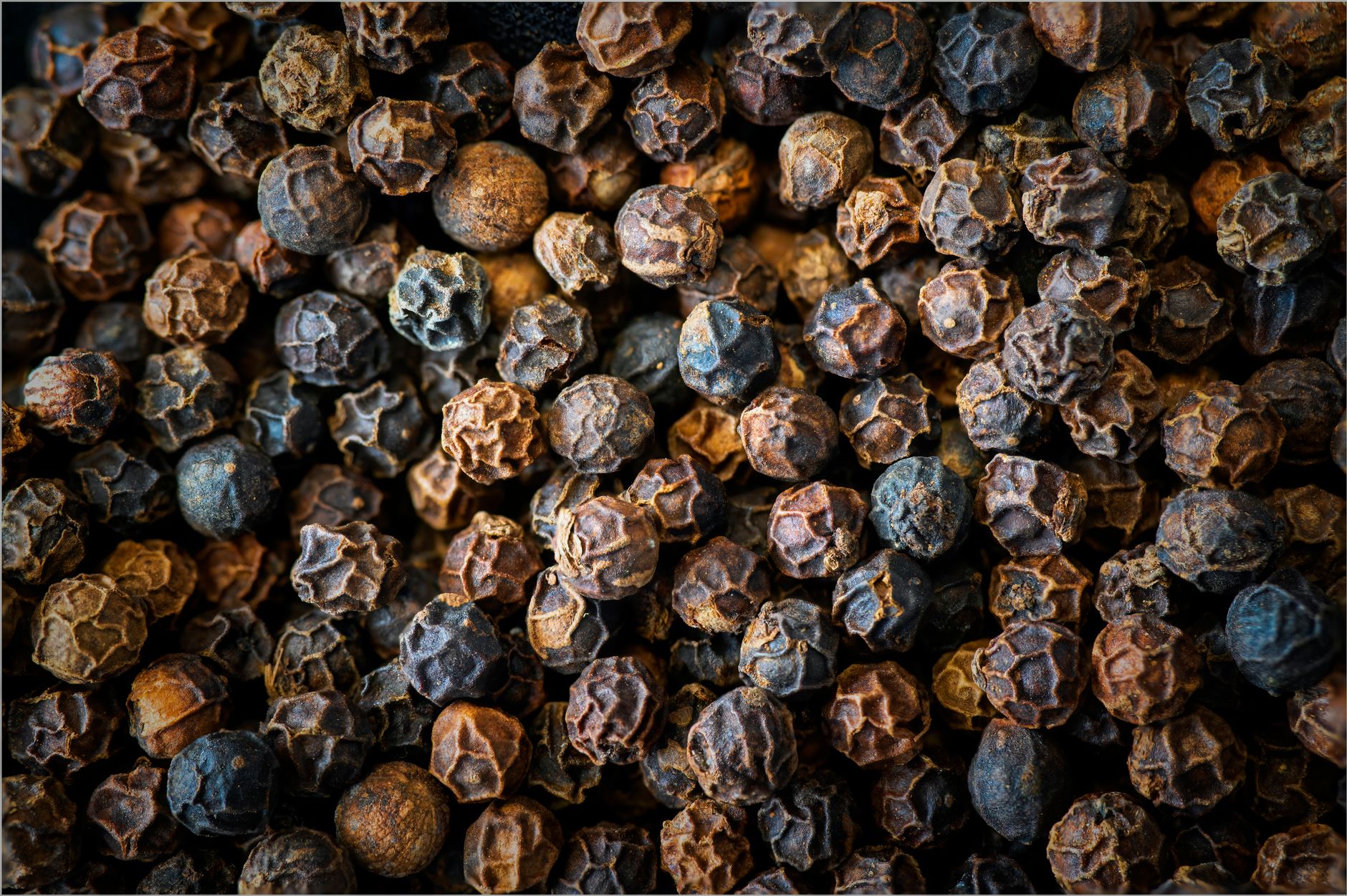
The traditional method is demanding. The berries are picked by hand, cluster by cluster, then dried in the sun. This is what gives black Kampot its deep, woody warmth. White Kampot starts from ripe red berries that are soaked and hulled, which explains its floral, discreet heat. Ordinary supermarket pepper is typically produced in large volumes and standardised for a low price.
Five clues to spot the real thing
- The label says “Kampot” and mentions the PGI, not just “Kampot style”.
- The origin is precise: Kampot or Kep, ideally with the producer or farm named.
- The berries are whole, with natural variation in size and colour; a perfectly uniform product is a warning sign.
- The aroma is rich as soon as you open the pack, with floral and fruity notes, not just dust and heat.
- The price reflects the work: a few euros per kilo is not a Kampot.
The taste test
Grind a few berries just before tasting. A real Kampot black pepper opens with warm, woody notes, then fruit and flowers, and the heat fades gently instead of burning. Ordinary pepper often gives a flat, sharp bite that disappears quickly. Fresh grinding matters: the aroma starts to fade as soon as the berry is crushed.
Why real Kampot costs more
Behind every tube there are vines that need daily care, a manual harvest, long drying and careful sorting. Yields are small and tied to a single region. That is the price of authenticity: you pay for the work and the terroir, and you use less, because a pinch of real Kampot goes much further than a spoonful of ordinary pepper.
Where to start
To taste the difference, begin with a single variety. Our Kampot Black Pepper 100g IGP is the classic: intense, woody, perfect for meat, sauces and eggs. For fish, poultry and white sauces, try the Kampot White Pepper 100g IGP. And if you cannot decide, the Classic Kampot Trio lets you compare black, white and red side by side, and makes a lovely gift.
Keep it at its best
Store your pepper in an airtight container, away from light, heat and humidity. Whole berries keep their aroma far longer than pre-ground pepper, so buy whole and grind at the table with a good mill.
Discover in the shop: Kampot Black Pepper 100g IGP · Kampot White Pepper 100g IGP · Classic Kampot Trio