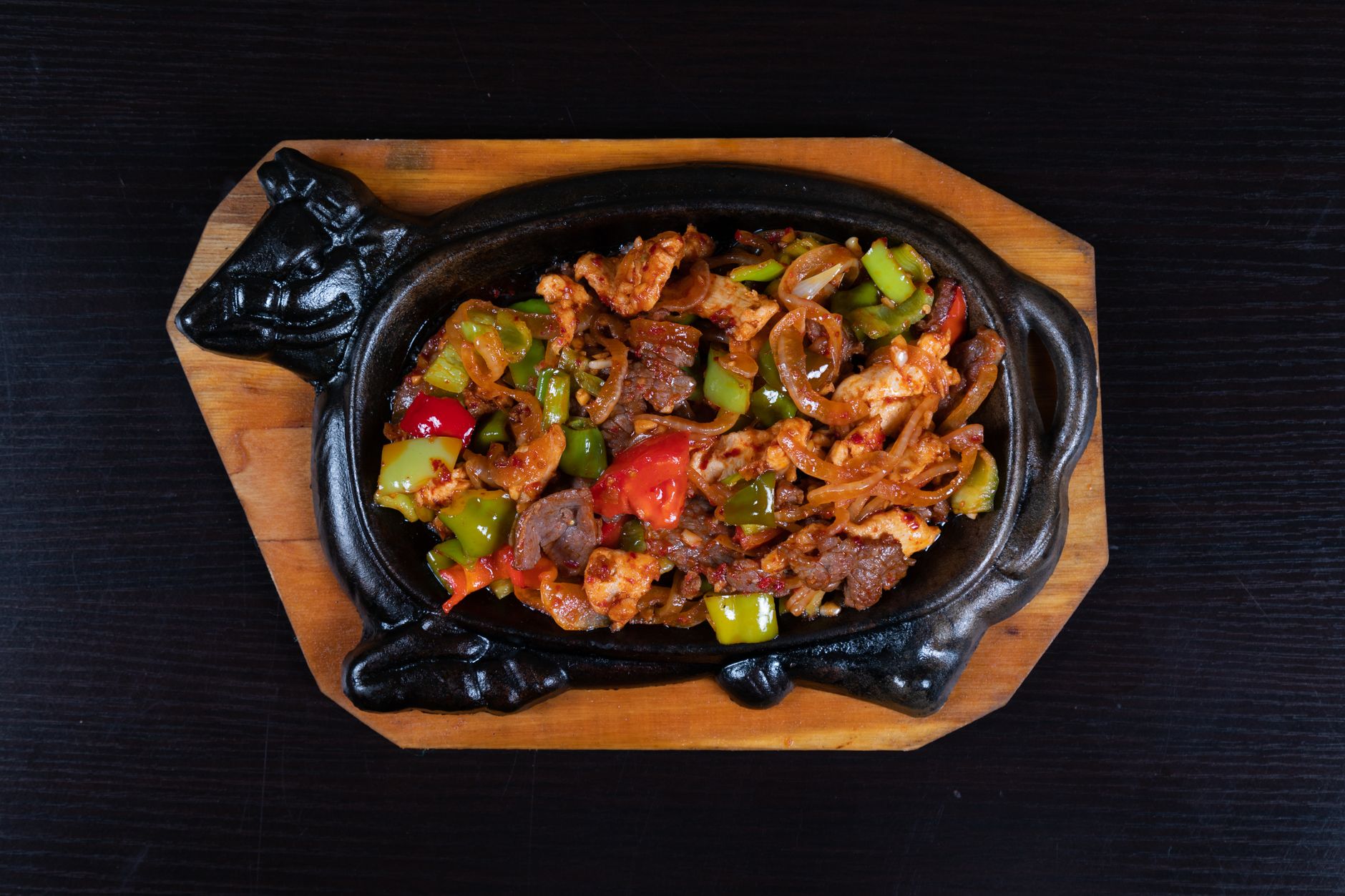
Photo: Collab Media / Pexels
Sizzling beef, crisp lettuce and a little dish of lime and pepper: lok lak is one of the dishes Cambodians cook and share most often, in homes as well as in restaurants from Phnom Penh to Kampot. Its secret fits in one small bowl, and that bowl is all about pepper.
What is lok lak?
Lok lak, often called shaken beef, is made of beef cut into cubes, marinated and seared in a very hot wok. The name is usually explained by the way the cook shakes the wok to turn the pieces. The meat is served on a bed of lettuce with slices of tomato, cucumber and onion, often with rice and sometimes a fried egg on top.
Different families and restaurants have their own marinade, usually built around soy sauce, oyster sauce, garlic and a little sugar. What does not change is the way it is eaten: wrap a piece of beef in a lettuce leaf, dip it, and enjoy the contrast between hot and cool, savoury and fresh.
Where does the dish come from?
Lok lak is considered a classic of Khmer home cooking, and it has a cousin in neighbouring Vietnamese cuisine, where a similar shaken beef dish is known as bo luc lac. People like to debate who cooked it first, and the dish probably travelled and evolved along with the people of the Mekong region. What matters at the table is the Cambodian signature: the lime and pepper dip.
The dipping sauce that makes the dish
The heart of lok lak is its dip: lime juice, salt and freshly ground pepper, stirred together in a small bowl. It looks simple, but it is the part that makes the dish unmistakably Cambodian. In the country’s kitchens, the pepper of choice comes from Kampot, which is why this humble dip is one of the best ways to taste it.
A coarse grind of Kampot black pepper IGP brings floral, slightly eucalyptus notes and a warmth that stays gentle, rather than the flat sting of ordinary pepper. Lime juice wakes it up, and salt rounds everything off.
How to make lok lak at home
- Cut 500 g of beef (sirloin or tenderloin) into 2 to 3 cm cubes.
- Marinate for 30 minutes with 2 tablespoons of soy sauce, 1 tablespoon of oyster sauce, 2 cloves of crushed garlic, 1 teaspoon of sugar and a pinch of freshly ground Kampot pepper.
- Sear the cubes in a very hot wok with a little oil for 3 to 4 minutes, shaking the pan so they brown on every side without stewing.
- Arrange lettuce, tomato, cucumber and onion on a plate and place the beef on top.
- Mix the juice of one lime with 1 teaspoon of fine salt and 1 teaspoon of freshly ground Kampot pepper, then serve it in a small bowl on the side.
Serve with steamed jasmine rice, and a fried egg if you like. The key is to keep the pan very hot and to cook the beef in small batches, so that it sears rather than boils in its own juices.
Why the pepper makes the difference
In this dish, pepper is not a seasoning added at the end, it is the sauce itself. That is why freshness matters: pepper ground at the last moment keeps its aromas, while pepper that has been ground for weeks only keeps its heat. A good mill makes all the difference, like the one in the Prestige set, with 100 g of Kampot black pepper and a mill included.
Do not hesitate to adjust the dip to your taste: more lime for freshness, more pepper for character. You can also try it with Kampot white pepper, rounder and more delicate.
Lok lak beyond the plate
Lok lak is a dish of sharing, served at family meals, restaurant tables and street stalls alike. Eating it is a good introduction to Khmer cuisine: no complicated technique, just good ingredients and attention to freshness. Making it at home is a simple way to bring a little of Cambodia to your table.
Discover in the shop: Kampot Black Pepper 100g IGP · Prestige Kampot Black Pepper 100g + Mill · Gift Classique Kampot Trio