Photo: Văn Long Bùi / Pexels
If you've already tasted our Kampot pepper, you know a little about the region it comes from. But some thirty kilometres away, on Cambodia's southern coast, lies a small seaside town that many rushed travellers overlook: Kep. That's a shame, because it sums up everything we love about this country: a turbulent history, briny seafood cuisine and still-wild nature.
A Seaside Resort Born in the Colonial Era
Kep's story begins in 1908, when the French colonial administration decided to develop this still-untouched coastline into a resort reserved for the elite and civil servants. The urban planners of the time drew inspiration from the chic resorts of the French Riviera and Normandy to design "Kep-sur-Mer". Its success was such that the town later earned the nickname "Cambodia's Saint-Tropez".
Kep's golden age ran from 1953 to 1970: the resort became THE holiday destination of the country, dotted with boldly designed modernist villas. Then came the tragedy of the Khmer Rouge regime and the years of conflict that followed, dealing a fatal blow to Cambodian tourism. It wasn't until the late 1990s and the return of peace that Kep gradually came back to life. Even today, you can stumble upon the ghostly silhouettes of these abandoned villas along the way, slowly being reclaimed by tropical vegetation — a sight quite unique in its kind.
The Crab Market, a Living Institution
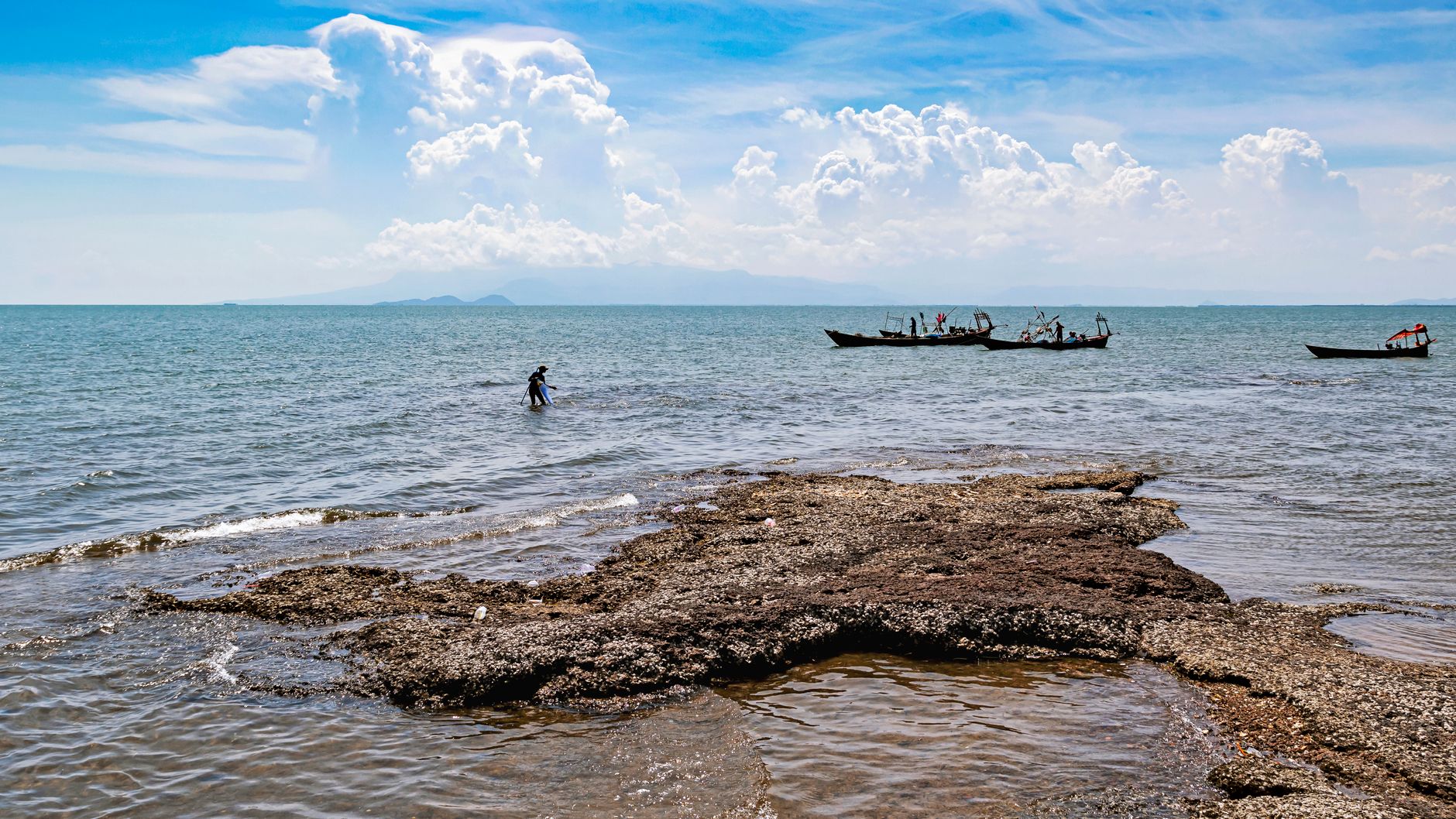
You can't talk about Kep without mentioning its crab market, famous since colonial times for its blue swimmer crabs, caught offshore and cooked... with Kampot pepper, of course. Unlike many "typical" markets sanitised for tourists, Kep's remains a genuinely working marketplace: the restaurants lining the shore buy their crabs straight from the fishermen who pull their boats onto the beach right in front of you.
Here you can enjoy the famous crab with Kampot green pepper, quickly stir-fried in a smoking wok and served with rice and a few crunchy vegetables. A deceptively simple dish, where the freshness of the ingredients and the aromatic power of the pepper do all the work.
Hiking in the National Park and a Getaway to Rabbit Island
Nature lovers should head to Kep National Park, one of the smallest in the country but far from the least interesting. A roughly 8-kilometre loop road, walkable on foot, winds through the jungle and offers open views over the bay, the neighbouring islands and the town below. For the more adventurous, steeper trails climb up to even more spectacular viewpoints.
From Kep's port, a short boat ride (about twenty minutes) takes you to Koh Tonsay, nicknamed Rabbit Island. This small island with its dense tropical forest can be explored on foot in 2 to 3 hours, past secluded coves and nearly deserted sandy beaches — the perfect spot for a break from it all before hitting the road again.
Planning Your Visit
- Kep is about 25 km from Kampot, just a thirty-minute drive — an easy stop to combine with a visit to the pepper plantations.
- Allow half a day for the crab market and the seafront, or a full day if you add the national park and Rabbit Island.
- The dry season, from November to April, remains the most pleasant time to enjoy the trails and the sea.
Kep embodies that distinctive blend that makes up Cambodia's charm: a rich history, generous nature and a cuisine that elevates simple ingredients with local spices. One more good reason, if one were needed, to keep exploring the regions that give rise to the products we import with such care.