Photo: Kaboompics.com / Pexels
The word that opens every recipe
In Khmer cuisine, one word keeps coming up: kroeung. Literally, it simply means "ingredients" — the kroeung of a curry is nothing more than the base blend used to make it. But behind this almost mundane term lies one of the pillars of the entire Cambodian kitchen: a paste of fresh herbs and spices, patiently pounded in a mortar, that flavours curries, soups and marinades alike.
One base, several faces
Classic kroeung, often called yellow kroeung, generally combines lemongrass, galangal, kaffir lime zest and leaves, fresh turmeric, garlic and shallot. It is precisely the generous use of fresh turmeric that sets Khmer kroeung apart from its Thai or Lao cousins, with which it nonetheless shares several ingredients. Unlike Thai curry pastes, the base version traditionally contains no chilli: heat, when wanted, is added separately.
There are also more elaborate variations, with more rhizomes and dried spices, used for festive dishes or richer curries. But the underlying logic is always the same: fresh aromatic herbs, patiently crushed until they form a smooth, fragrant paste.
The star of Cambodian tables: amok
It's impossible to talk about kroeung without mentioning amok, Cambodia's national dish. This fish curry, steamed in a banana leaf, owes all its aroma to this spice paste, blended with coconut milk to form a delicate, fragrant mousse. Kroeung also appears in prahok ktiss, a preparation of pork simmered with fermented fish paste and coconut milk, served with raw vegetables for dipping.
A gesture, not just a recipe
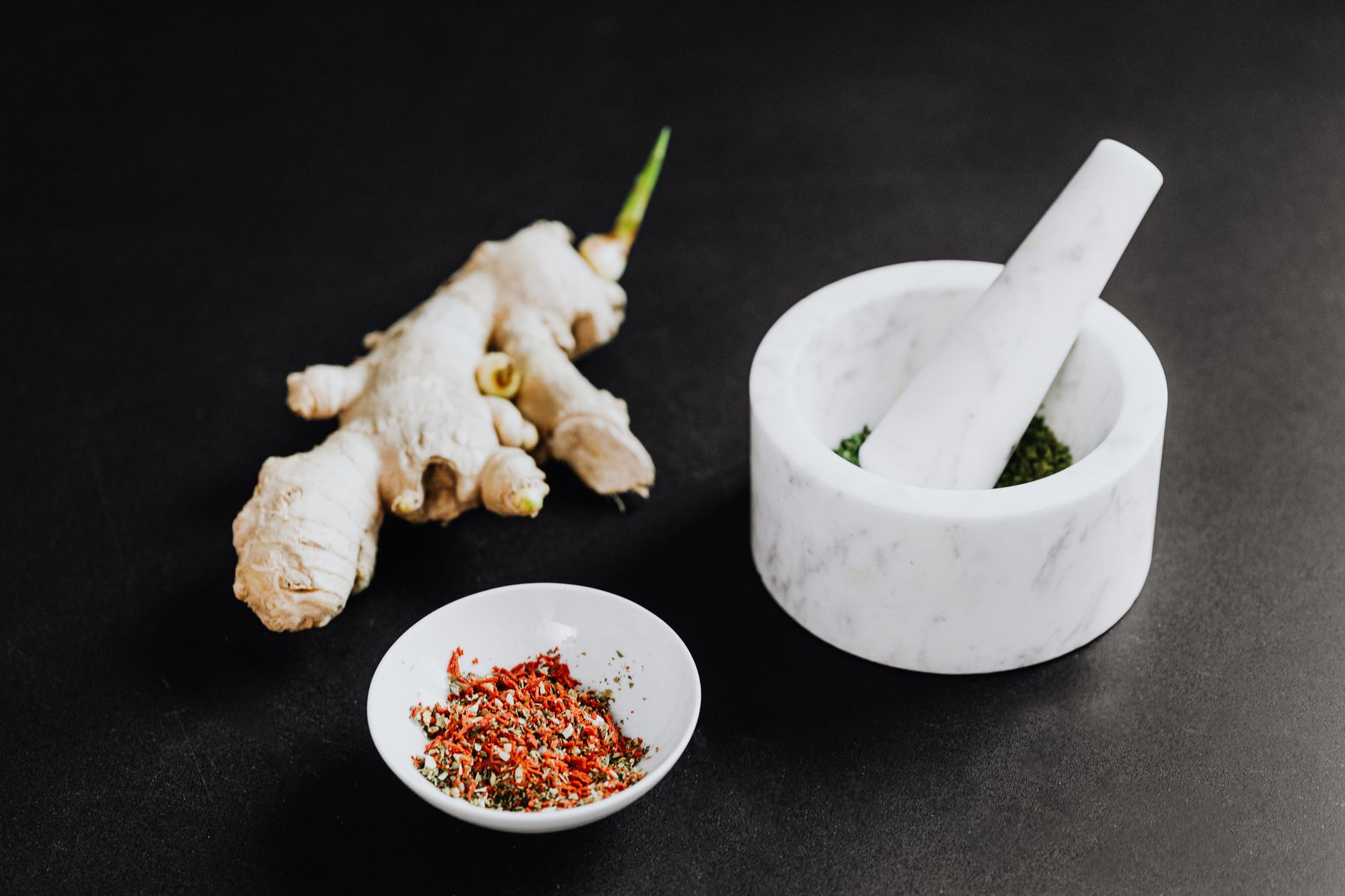
What strikes you when watching kroeung being prepared in a Cambodian kitchen is the time devoted to it. Each ingredient is finely sliced before being pounded, step by step, until a smooth texture is reached — work that many families still do by hand, with a stone mortar, rather than a blender. These are gestures not unlike those found in the making of our own spice blends: patience and the freshness of ingredients always come before speed.
To bring the experience home
If you want to get a taste of this cuisine without travelling to the other side of the world, opt for fresh, quality ingredients: lemongrass, ginger, turmeric, paired with our Cambodian spices, can help recreate an aromatic base close to traditional kroeung. A curry thrown together on a weeknight, and a little piece of Cambodia finds its way onto your plate.